
Aluminum Roof: Uses, Benefits, Costs & When It’s Worth It
Choosing the right roofing materials for your home or commercial building is one of the most significant decisions you’ll make as a property owner. Among metal roofing options, aluminum stands out as a premium choice that delivers exceptional performance in specific environments. This comprehensive guide breaks down everything you need to know about aluminum roofing panels—from costs and benefits to when this investment truly makes sense.
Quick Answer: Is an Aluminum Roof Worth It?
For homeowners and building owners weighing their options in 2024–2025, the short answer is this: an aluminum roof is absolutely worth it if you live in a coastal, high-moisture, hurricane-prone, or heavy-snow region. The material’s unmatched corrosion resistance and lightweight durability justify the higher upfront cost when environmental conditions would otherwise destroy conventional roofing materials prematurely.
Aluminum roofs typically cost 2–3x more than asphalt shingles, with installed prices ranging from approximately $8–$18 per square foot depending on the system, thickness, and roof complexity. However, these aluminum roofing systems can last 40–70+ years under the right conditions—often outlasting the original owners and requiring minimal upkeep throughout their service life.
In dry inland climates where corrosion isn’t a primary concern, steel metal roofing or premium architectural asphalt shingles may deliver similar performance at a lower price point. The key is matching your roofing investment to your specific climate challenges.
Quick Pros vs. Cons Snapshot:
Pros | Cons |
|---|---|
40–70+ year lifespan potential | Higher upfront cost than asphalt or steel |
Superior corrosion resistance (won’t rust) | Softer than steel; more prone to denting from hail |
Lightweight (easier on structures) | Requires experienced installer for thermal expansion |
Highly recyclable (eco friendly) | Mill finish oxidizes to dull gray over time |
Excellent coastal performance | May be overkill for dry inland climates |
Pros
Cons
40–70+ year lifespan potential
Higher upfront cost than asphalt or steel
Superior corrosion resistance (won’t rust)
Softer than steel; more prone to denting from hail
Lightweight (easier on structures)
Requires experienced installer for thermal expansion
Highly recyclable (eco friendly)
Mill finish oxidizes to dull gray over time
Excellent coastal performance
May be overkill for dry inland climates
What Is an Aluminum Roof?
An aluminum roof is a metal roofing system constructed from aluminum panels, shingles, or tiles rather than steel, copper, or zinc alternatives. As the third most abundant element on Earth, aluminum offers a unique combination of properties that make it particularly suitable for demanding roofing applications.
For roofing purposes, aluminum is typically alloyed (commonly using 3000 and 5000 series alloys) to enhance strength and durability while maintaining its naturally lightweight characteristics. Sheffield Metals and other manufacturers commonly use 3105 aluminum alloy, which contains primarily recycled material with minimal pure aluminum content.
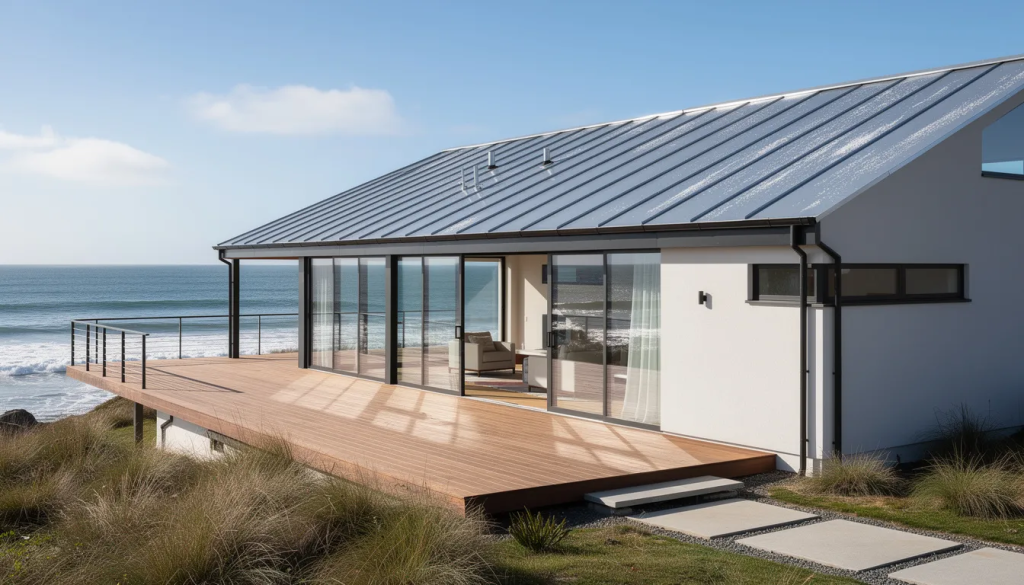
Aluminum roofing comes in several distinct formats:
Standing seam panels – Vertical ribs with concealed fasteners for a clean, modern appearance
Corrugated panels – Wave-pattern sheets often used on agricultural and industrial applications
Aluminum shingles and tiles – Stamped products that mimic the look of cedar shakes, natural slate, or Mediterranean clay tile
Common thickness specifications include:
0.019” to 0.024” – Lighter residential applications
0.032” – Standard residential roofing (most common)
0.040” – Commercial roofing and enhanced durability
0.050” to 0.063” – Copings, caps, and specialty trim
Thicker gauges correlate directly with improved dent resistance, structural strength, and cost. Aluminum roofing is especially prevalent in coastal regions along the Atlantic seaboard, Gulf Coast, Pacific coastline, and throughout the Caribbean islands, where its corrosion resistance provides critical protection against salt-laden air.
Key Properties of Aluminum as a Roofing Metal
Understanding why aluminum behaves differently from steel or copper on a roof helps explain when this material delivers the best value. The physical properties of aluminum create both advantages and considerations that every property owner should understand.
Aluminum’s main characteristics relevant to roofing include:
Low density – Exceptionally lightweight compared to other roofing materials
High strength-to-weight ratio – Structural performance without excessive weight
Natural corrosion resistance – Forms protective oxide layer instead of destructive rust
High thermal expansion – Expands and contracts more than steel with temperature changes
Relative softness – Easier to form but more susceptible to denting
Modern aluminum roofing panels are typically factory-finished with high-performance paint systems such as PVDF (sold under brand names like Kynar 500® and Hylar 5000®). These coatings provide color stability, UV resistance, and additional protection against environmental exposure.
Self‑Protecting Oxide Layer (No Red Rust)
When aluminum is exposed to air and moisture, something remarkable happens: instead of developing the destructive red rust that plagues iron and steel, aluminum forms a thin, transparent oxide layer that actually protects the underlying metal. This aluminum oxide coating is self-healing—when scratched or cut, the exposed aluminum quickly oxidizes and seals itself.
This oxidation forms a tight, stable barrier that prevents the deep structural corrosion affecting steel panels in salty or humid environments. For property owners within a few miles of the ocean or brackish bays, this single property can mean the difference between a roof lasting 20 years versus 50+ years.
Cut edges and minor scratches on aluminum panels tend to protect themselves through rapid oxidation, reducing the risk of edge creep and corrosion spread that can affect unfinished steel. This is why aluminum has become the default choice for coastal applications where sea salt spray would cause other metal roofing panels to deteriorate rapidly.
Lightweight but Strong
Aluminum ranks among the lightest roofing choices available on the market. A typical aluminum roof weighs approximately 0.4–0.7 pounds per square foot, often about half the weight of equivalent steel products.
To put this in perspective: a 0.032” aluminum roof weighs less than 0.5 pounds per square foot, compared to 24-gauge Galvalume steel roofing at 1 to 1.5 pounds per square foot—despite the steel being thinner. Some aluminum roofing systems weigh as little as five pounds per roofing square (100 square feet).
This lightweight nature provides significant practical benefits:
Reduced structural load on rafters, trusses, and wall framing
Easier installation with less stress on workers
Better suitability for retrofits on older homes and historic buildings
Lower seismic risk in earthquake-prone regions
Compatibility with structures that couldn’t support tile, slate, or multiple asphalt layers
For older churches, historic properties, and light-framed construction where structural reinforcement would be difficult or expensive, aluminum’s weight advantage can make the difference between a feasible project and one requiring costly structural upgrades.
Thermal Expansion and Movement
Aluminum expands and contracts approximately twice as much as steel for the same temperature change. This property requires careful attention during design and installation to prevent problems over the roof’s long lifespan.
For aluminum panels exceeding 15–20 feet in length, installers must incorporate:
Floating clips that allow panel movement
Slotted fasteners at connection points
Sliding connections at transitions
Appropriate clip spacing per manufacturer guidelines
When thermal expansion isn’t properly accommodated, property owners may experience oil canning (visible waviness in panels), popping or clicking noises during temperature swings, premature clip or fastener stress, and accelerated paint wear at connection points.
Experienced metal roofing contractors understand these details and follow specific installation protocols for aluminum. This is one reason why hiring installers with documented aluminum experience matters more than general roofing expertise.
Advantages of an Aluminum Roof
Aluminum represents a premium tier within the metal roofing family, offering distinct advantages that justify its higher cost in the right applications. While many benefits apply universally, several are most impactful in coastal or high-moisture environments where aluminum truly outperforms alternatives.
Major Benefits at a Glance:
Exceptional corrosion resistance
Long service life (40–70+ years)
Lightweight for structural safety
Energy efficiency and cooling potential
High recyclability
Extensive color options
Strong warranty possibilities
Excellent Corrosion Resistance in Coastal Climates
In ocean and bayfront environments, salt-laden air attacks unprotected steel with remarkable speed. Galvalume and galvanized steel panels that perform beautifully 50 miles inland can show significant corrosion within just a few years near the shoreline. Aluminum maintains its structural integrity far longer under these same conditions.

Where aluminum excels as the default metal choice:
Atlantic seaboard – From Maine to Florida
Gulf Coast – Florida, Alabama, Mississippi, Louisiana, Texas
Pacific coastline – California, Oregon, Washington
Caribbean islands – Both inland and coastal properties
Great Lakes region – Where road salt exposure creates corrosive conditions
High-end aluminum systems can maintain performance and appearance for decades even within 1–3 miles of the shoreline. Many paint systems on aluminum carry coastal warranties where similar coatings on steel would have reduced or no coverage near saltwater. For properties in these regions, aluminum isn’t just preferable—it’s often the only sensible long-term choice.
Long Service Life
When properly designed and installed correctly, aluminum roofs can last 40–50 years on average, with many systems reaching 60–70+ years with routine maintenance. This long lifespan represents a dramatic improvement over conventional options.
Roofing Material | Typical Lifespan |
|---|---|
3-tab asphalt shingles | 15–20 years |
Architectural asphalt shingles | 20–30 years |
Steel metal roofing | 30–50 years |
Aluminum roofing | 40–70+ years |
Copper roofing | 70–100+ years |
Roofing Material
Typical Lifespan
3-tab asphalt shingles
15–20 years
Architectural asphalt shingles
20–30 years
Steel metal roofing
30–50 years
Aluminum roofing
40–70+ years
Copper roofing
70–100+ years
This longevity stems from both the corrosion resistance of the aluminum substrate and the durability of factory-applied PVDF coatings. For homeowners planning to remain in their property long-term, the extended service life offsets a substantial portion of the upfront cost difference versus replacing asphalt shingles two or three times over the same period.
Lightweight for Structural Safety & Retrofits
An aluminum roof typically weighs far less than clay tile, concrete tile, slate, or even multiple accumulated layers of asphalt shingles. This weight savings translates directly into reduced structural and seismic loading on the building.
Consider this example: replacing two deteriorated layers of old shingles and felt with an aluminum standing seam system can reduce dead load on aging framing by 50% or more. This weight reduction can extend the life of original structural members while eliminating the risk of gradual frame deflection.
In some retrofit scenarios, local building departments may permit aluminum installation over a single existing shingle layer (where code allows), specifically because of aluminum’s minimal weight addition. This can eliminate costly tear-off and disposal while still delivering a new roof with decades of expected service.
This characteristic makes aluminum particularly valuable for:
Historic buildings with preservation requirements
Churches and large-span structures
Light-framed residential construction
Properties in earthquake zones
Structures where reinforcement would be prohibitively expensive
Energy Efficiency & Comfort
Aluminum heats and cools quickly. When paired with reflective “cool roof” finishes featuring high Solar Reflective Index (SRI) values, aluminum roofing can reduce rooftop surface temperatures significantly during summer months.
The potential benefits include:
Reduced cooling loads – ENERGY STAR-rated cool roof coatings can lower electric bills by 10–20% in hot climates
Decreased air conditioning strain – Less thermal transfer into the attic keeps your home cooler
Lower peak demand charges – For commercial buildings with demand-based utility rates
Extended HVAC equipment life – Reduced runtime means less stress on cooling systems
Real-world energy savings depend on several factors: attic insulation levels, roof color selection, ventilation design, and local climate. Properties in Phoenix, Houston, and Miami will see more dramatic benefits than those in Minneapolis or Seattle. Adding radiant barriers and proper attic insulation further amplifies these advantages while reducing rain noise transmission.
Highly Recyclable and Eco‑Friendly
Aluminum stands as one of the most recyclable construction metals in the world. Approximately 95% of all aluminum roofing systems installed worldwide are manufactured from previously recycled materials rather than virgin aluminum. This high recycled content dramatically reduces the embodied energy of the finished product.
At end of life—which may be 50–70 years in the future—old aluminum roofing can be fully recycled into new products. This contrasts sharply with asphalt shingles, which typically end up in landfills when replaced. For property owners pursuing LEED certification or other green building standards, aluminum roofing often earns points for recycled content, recyclability, and reduced environmental impact.
From a lifecycle perspective, one durable aluminum roof may replace two, three, or even four asphalt roofs over the same timeframe. This means less manufacturing, less transportation, less installation labor, and far less construction waste—a genuinely eco friendly choice when considering total environmental impact.
Color & Style Flexibility
Prefinished aluminum coils and panels are available in an extensive range of PVDF colors, including:
Standard solid colors (whites, grays, browns, greens, blues)
Metallic finishes for contemporary aesthetics
Matte and low-gloss options
Custom color matching for specific architectural requirements
Beyond metal roofing panels, aluminum shingles and tiles can convincingly replicate the appearance of cedar shakes, natural slate, or Mediterranean clay tile while remaining dramatically lighter and more durable than the materials they imitate.
Note that bare “mill finish” aluminum—without paint coating—will weather from its original bright silver appearance to a dull gray patina as the oxide layer develops. This is purely cosmetic and doesn’t harm performance, but may not suit every architectural style. Painted systems retain color far more consistently, though all coatings will gradually fade and chalk over decades of UV exposure.
For best results, coordinate your aluminum roof color with gutters, fascia, trim, and siding for a cohesive exterior design.
Strong Warranty Potential
Aluminum roofing warranties typically include several components:
Warranty Type | Typical Coverage |
|---|---|
Paint/finish warranty | 20–35+ years |
Substrate warranty | 20–lifetime |
Weathertightness (commercial) | 10–20 years |
Warranty Type
Typical Coverage
Paint/finish warranty
20–35+ years
Substrate warranty
20–lifetime
Weathertightness (commercial)
10–20 years
Many manufacturers offer extended PVDF paint warranties even in coastal areas, provided specific conditions are met regarding installation distance from shoreline, roof pitch requirements, proper installation methods, and regular maintenance/cleaning obligations.
Before purchasing, review warranty documents carefully for exclusions. Distance to ocean (within 1 mile vs. 3 miles), minimum roof slope, installer certification requirements, and cleaning schedules all affect coverage. Using manufacturer-approved installers or certified contractors is often required to preserve full warranty protection.
Drawbacks and Limitations of Aluminum Roofing
No roofing material is perfect for every application, and aluminum is no exception. Understanding these limitations helps property owners make informed decisions and set realistic expectations.
Primary Drawbacks:
Higher upfront cost versus asphalt and steel
Greater susceptibility to denting
Increased thermal movement requiring careful detailing
Aesthetic changes on uncoated surfaces
Higher Upfront Cost
Realistic 2024–2025 U.S. pricing for aluminum roofing:
System Type | Installed Cost per Sq. Ft. |
|---|---|
Exposed fastener aluminum | $6–$9 |
Standing seam aluminum | $8–$12 |
Premium/complex aluminum systems | $15–$18 |
Architectural asphalt (comparison) | $4–$7 |
Steel standing seam (comparison) | $7–$11 |
System Type
Installed Cost per Sq. Ft.
Exposed fastener aluminum
$6–$9
Standing seam aluminum
$8–$12
Premium/complex aluminum systems
$15–$18
Architectural asphalt (comparison)
$4–$7
Steel standing seam (comparison)
$7–$11
Aluminum typically costs 10–20% more than comparable steel metal roofing systems due to raw material pricing and manufacturing demand. While lifecycle cost calculations often favor aluminum over 40–60 years, the initial investment represents a real barrier for budget-conscious homeowners.
For a typical 2,000 square foot roof, the difference between architectural asphalt shingles at $6/sq. ft. ($12,000) and aluminum standing seam at $10/sq. ft. ($20,000) totals $8,000—money that must be available upfront regardless of long-term value.
More Prone to Denting
Because aluminum is softer than steel, it’s more susceptible to cosmetic damage from:
Large hail (1” diameter and above)
Falling branches during storms
Frequent foot traffic during maintenance
Dropped tools during installation or service work
Denting typically affects appearance rather than waterproof performance. The roof continues to function properly, but owners who expect a perfectly flat surface may find cosmetic dents bothersome.
For properties in hail-prone regions of the Midwest and Great Plains, consider:
Thicker gauges (0.032” or 0.040” minimum)
Impact-resistant panel profiles
Understanding that cosmetic damage may occur during severe weather
Reviewing insurance coverage for cosmetic versus functional damage
Requires Careful Design for Expansion
Aluminum’s higher thermal expansion coefficient means designers and installers must accommodate more movement than with steel systems. Best practices include:
Using floating clips on long standing seam panels
Avoiding excessively long fixed-fastener runs
Following manufacturer spacing charts precisely
Incorporating expansion joints on very long runs
When installers underestimate movement requirements—common with DIY installations or inexperienced crews—visible problems develop over time: oil canning (waviness in panels), popping or ticking noises during temperature changes, clip or fastener stress, and premature coating wear at connection points.
This is why hiring contractors with specific aluminum metal roofing experience and verifiable references matters significantly.
Natural Color Changes and Weathering
Unpainted aluminum gradually loses its bright silver sheen as the oxide layer thickens, developing a dull gray patina over time. This weathering is entirely cosmetic—it doesn’t harm structural performance—but may not complement every architectural style.
Painted aluminum systems largely avoid this color shift, though all coatings will slowly fade and chalk after decades of UV exposure. In high-sun climates like Arizona, Florida, or Southern California, choosing high-quality PVDF finishes provides better long-term color retention than less expensive paint systems.
Types of Aluminum Roofing Systems
Aluminum is available in several distinct formats, each suited to different roof shapes, budgets, and aesthetic preferences. The choice among these systems affects installation cost, appearance, maintenance requirements, and suitability for various roof slopes.
Standing Seam Aluminum Panels
Standing seam represents the premium tier of aluminum roofing, featuring vertical ribs with concealed fasteners for a clean, contemporary appearance. This system is ideal for roof slopes of 3:12 and steeper, with some assemblies approved for lower slopes when specific installation protocols are followed.

Key characteristics:
Panel widths: Typically 12”, 16”, or 18”
Seam types: Mechanically seamed or snap-lock
Production: Site-formed from coil or factory-manufactured
Applications: Custom homes, modern farmhouses, churches, commercial buildings
Standing seam aluminum is particularly prevalent in coastal regions where the combination of corrosion resistance and weather-tight performance delivers maximum value. Benefits include a sophisticated modern aesthetic, excellent weathertightness from the raised seam design, and minimal exposed fasteners requiring maintenance.
Exposed-Fastener Corrugated and R‑Panels
Exposed fastener systems use visible screws with neoprene washers through the face of the panel, creating a more economical alternative to standing seam.
Common profiles include:
7/8” corrugated – Classic wave pattern
R-panel/PBR – Trapezoidal ribs for added strength
7.2 structural rib – Heavy-duty industrial applications
These systems are widely used on agricultural buildings, workshops, storage facilities, and some commercial buildings where budget takes priority over aesthetics. While less expensive than standing seam, exposed fastener systems require periodic screw and washer inspection—typically every 5–10 years—as gaskets age and thermal cycling works on the penetrations.
In severe coastal environments, specifying high-quality stainless steel or specially coated fasteners is critical. Standard zinc-plated screws can create galvanic corrosion problems at screw points, potentially compromising the aluminum panel’s integrity at every penetration.
Aluminum Shingles, Tiles & Shake Profiles
Stamped aluminum shingles and panels replicate the appearance of traditional roofing materials while delivering aluminum’s durability advantages:
Cedar shake profiles – Realistic wood grain texture
Natural slate appearance – Smooth or textured stone look
Clay tile replicas – Mediterranean and Spanish Colonial styles
These products work exceptionally well on complex, steep roofs featuring multiple hips, valleys, dormers, and architectural details where large panels would be difficult to install and detail properly. Interlocking designs provide excellent wind resistance, making them popular for upscale residential projects and historic building renovations.
While material cost runs high, the smaller individual pieces reduce waste on cut-intensive roofs where large panels would generate significant scrap.
Cost of Aluminum Roofs and Value Over Time
Understanding aluminum roofing costs requires separating upfront pricing from long-term value considerations including lifespan, maintenance burden, and potential energy savings.
Typical Installed Cost Ranges
As of 2024–2025, realistic national averages for installed aluminum roofing:
System Type | Price Range (per sq. ft.) |
|---|---|
Exposed fastener aluminum | $6–$9 |
Standard standing seam | $8–$12 |
Premium/complex installations | $15–$18 |
System Type
Price Range (per sq. ft.)
Exposed fastener aluminum
$6–$9
Standard standing seam
$8–$12
Premium/complex installations
$15–$18
For comparison:
Steel standing seam: $7–$11 per sq. ft.
Architectural asphalt shingles: $4–$7 per sq. ft.
Several factors push aluminum roof costs toward the higher end:
Steep roof pitches requiring additional safety equipment
Multiple dormers, skylights, or valleys increasing cut waste and labor
Thicker gauges (0.040” vs. 0.032”)
Premium PVDF color finishes
Difficult access requiring specialty equipment
Regional labor rate variations
Lifecycle Costs and ROI
Lifecycle cost analysis considers total spending over 40–60+ years, including replacements, repairs, maintenance, and energy implications.
Example Comparison over 50 Years:
Scenario: 2,000 sq. ft. roof
Option A: Architectural Asphalt
Initial cost: $12,000
Replacement at year 25: $15,000 (inflation adjusted)
Total (simplified): $27,000
Plus: Two disposal/tear-off cycles, potential leak repairs
Option B: Aluminum Standing Seam
Initial cost: $20,000
Maintenance over 50 years: $2,000
Total: $22,000
Plus: Potential cooling energy savings, higher resale value
When owners plan to remain in their property long-term, aluminum’s economics improve substantially. Additional value comes from:
Lower cooling bills in hot climates (up to 20% reduction possible)
Potential home resale premium for documented long-life metal roof
Avoided disruption from multiple reroofing projects
No landfill disposal of torn-off shingles
Aluminum delivers its best ROI for long-term owners in climates where asphalt shingles fail prematurely due to heat, humidity, salt exposure, or storm damage.
When Is an Aluminum Roof the Best Choice?
Matching aluminum roofing to specific climates, building types, and owner circumstances maximizes the return on this premium investment.
Ideal Climates & Locations
Strongly Recommended:
Coastal locations within 1–5 miles of saltwater (Atlantic, Gulf, Pacific)
Great Lakes properties with heavy road salt exposure
Caribbean islands (both coastal and inland)
High-moisture regions (Pacific Northwest, Gulf Coast, Southeast)
Hurricane-prone areas where corrosion resistance and durability matter
Well-Suited:
Heavy snow regions (low weight advantage, snow guard compatibility)
High-rain areas where long-term water resistance is critical
Hot climates seeking energy efficiency benefits
Consider Alternatives:
Dry interior climates with minimal corrosion risk (steel may perform similarly at lower cost)
Severe hail regions where cosmetic denting is unacceptable
Best Building Types for Aluminum Roofing
Aluminum roofing delivers exceptional value for:
Coastal primary homes and vacation properties – Maximum corrosion protection where it matters most
Churches and large-span structures – Low weight reduces structural stress
Historic buildings – Lightweight option preserving original framing
Light-framed construction – Avoids costly structural reinforcement
Commercial buildings – Long service life minimizes business disruption
Properties prioritizing aesthetics – Distinctive standing seam or high-end shingle appearance
Business owners with low tolerance for operational disruption often favor aluminum to avoid the repeated reroofing cycles that come with shorter-lived materials.
Situations Where Aluminum May Not Be Ideal
Tight budgets where upfront cost is the primary constraint
Short ownership horizons (planning to sell within 5–10 years)
Very low-risk inland climates where basic asphalt performs adequately
Severe hail regions unless cosmetic denting is acceptable
Ultra-low-slope commercial roofs (below 1:12) where membrane systems typically outperform metal
Before committing, weigh cost, climate conditions, neighborhood roofing norms, and resale timeline against aluminum’s advantages.
Practical Considerations: Installation, Noise, and Maintenance
Actual aluminum roof performance depends heavily on installation quality and appropriate ongoing care. This section addresses the practical concerns homeowners most commonly raise.
Choosing an Experienced Aluminum Roofing Installer
Not all metal roofing contractors have equivalent experience with aluminum systems. Seek installers who can demonstrate:
Specific experience with aluminum standing seam or shingle systems
Current licenses and adequate insurance coverage
Manufacturer certifications for your chosen products
Recent aluminum roof references (last 3–5 years)
Familiarity with coastal installation procedures (if applicable)
Request detailed proposals that specify:
Panel profile and manufacturer
Aluminum thickness (gauge)
Fastener type and material
Underlayment specifications
Flashing and trim details
Clip spacing and attachment methods
Cutting corners on installer selection is the fastest way to undermine an aluminum roofing investment. Proper clip spacing, panel length limits, and expansion detailing require knowledge that general roofers may lack.
Noise, Insulation, and Interior Comfort
The “metal roofs are loud” concern stems from agricultural and industrial buildings with minimal insulation. Modern residential aluminum installations tell a different story.
When installed correctly over solid sheathing (plywood or OSB), quality underlayment, and well-insulated attics, aluminum roofs produce no more noise than asphalt during rain. The sound becomes a soft background patter rather than a distracting drumbeat.
Perceived noise is highest on:
Open-framed structures (carports, pole barns)
Uninsulated porches and covered patios
Buildings without solid roof decking
For homeowners concerned about noise, adding attic insulation, sound-deadening underlayments, or rigid foam above the deck further reduces transmission. Most owners of properly installed residential aluminum roofs report being pleasantly surprised by how quiet their new roof actually is.
Routine Maintenance and Inspections
Aluminum roofing earns its “low maintenance” reputation, but “low” doesn’t mean “none.” Basic care extends service life and preserves warranty coverage:
Annual or Biannual Tasks:
Visual inspection for debris accumulation
Clear leaves and branches from valleys
Clean gutters and downspouts
Check for obvious damage after severe storms
Every 5–10 Years:
Professional inspection of fasteners and sealants
Screw and washer evaluation (exposed fastener systems)
Touch-up of minor coating damage
Inspection of flashings and transitions
As Needed:
Gentle cleaning with low-pressure water and non-abrasive detergents
Salt residue removal in coastal locations
Algae or mold treatment following manufacturer guidelines
For properties in snowy regions, snow guards prevent dangerous sliding snow while protecting gutters and landscaping below. Walk pads in high-traffic areas protect panels from repeated foot traffic during maintenance access.
How to Decide if an Aluminum Roof Is Right for You
Making the aluminum decision requires honest assessment of your specific circumstances. Work through this checklist before committing:
Key Questions to Answer:
Climate exposure – Do you face saltwater, high humidity, heavy rain, or hurricane risk?
Distance to saltwater – Are you within 5 miles of ocean, bay, or brackish water?
Budget flexibility – Can you afford the higher upfront cost versus asphalt?
Ownership timeline – Do you plan to stay in this property 15+ years?
Aesthetic preferences – Does standing seam or premium shingle appearance appeal to you?
Building condition – Would your structure benefit from reduced roof weight?
Recommended Next Steps:
Obtain written quotes for aluminum, steel, and premium asphalt from at least three contractors
Request estimated lifespans and warranty details for each option
Ask specifically how each contractor’s recommended system handles your local wind, snow, and code requirements
Verify installer experience and references for aluminum specifically
Aluminum roofing represents a premium, long-life choice that delivers maximum value where corrosion resistance, durability, and minimal weight are top priorities. For coastal homeowners, the calculation is straightforward—aluminum often pays for itself by avoiding the accelerated replacement cycle that affects steel and asphalt in corrosive environments.
For everyone else, the decision comes down to matching investment horizon with expected service life. If you plan to enjoy your property for decades, absorb the higher upfront cost now to avoid the hassle, expense, and waste of multiple roof replacements later. Your future self—and the environment—will thank you.